
Day 1 — Setting the Visual Foundation
Why a Cozy Game?
There aren’t many cozy, slow‑paced games inside Fortnite, but my family really enjoys them. I wanted to create something in that space—something calmer, more intentional, and inspired by the charm of Animal Crossing. Island Crossing is my attempt to bring that feel into Fortnite while still respecting the constraints and systems of UEFN.

Camera & Controls
I started by adjusting the camera and third‑person controls to create a perspective closer to Animal Crossing: slightly elevated, pulled back, and wide enough to make the environment feel approachable. Even without gameplay, this shift immediately changed the feel of the island.
Curved World Material
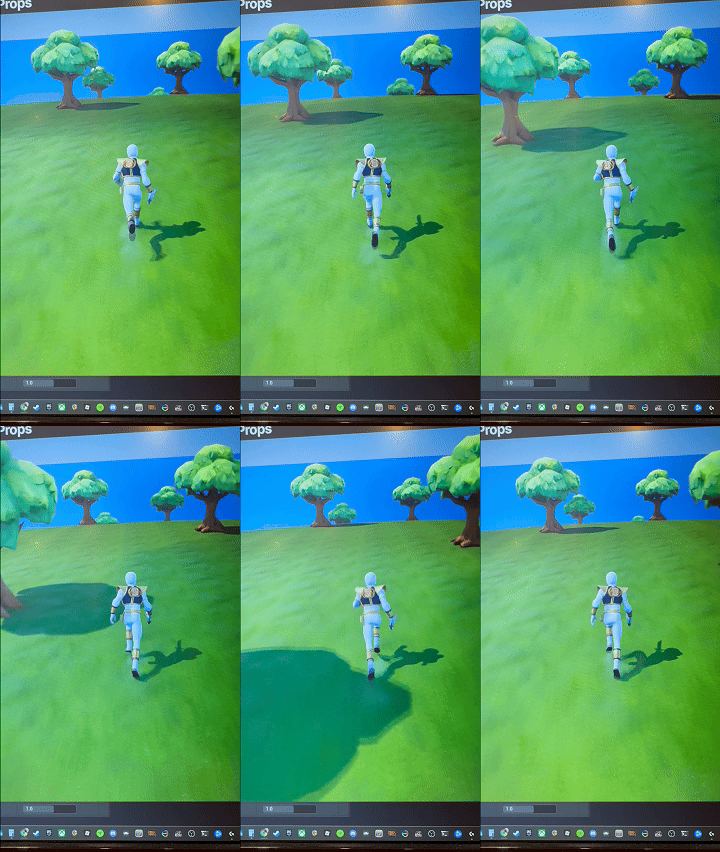
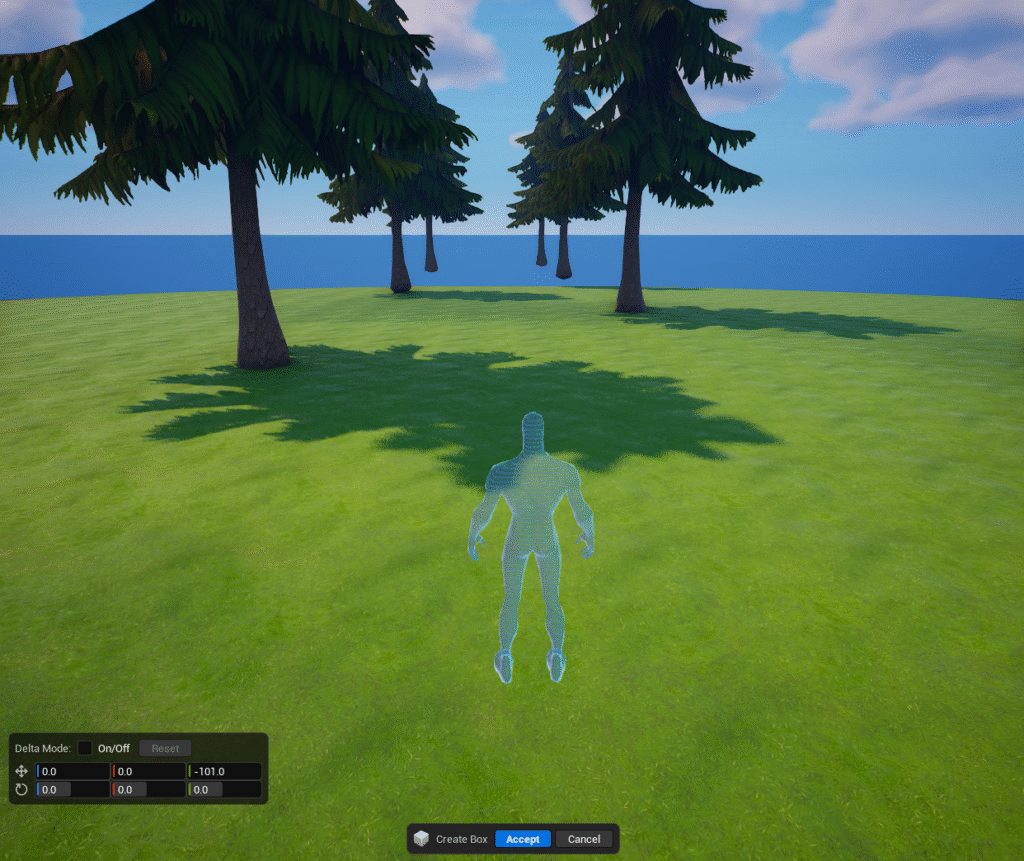
With the camera in place, I moved on to implementing a Curved World material. The setup followed a few good tutorials, but the decision carried a meaningful tradeoff:
- The effect relies on modifying the World Position Offset.
- That requires raw material access.
- Which means standard Fortnite meshes won’t work.
Every mesh that participates in the curvature needs to be custom. It increases production time, but it supports the long‑term goal of giving the island a distinct, handcrafted identity.
Early Technical Hurdle
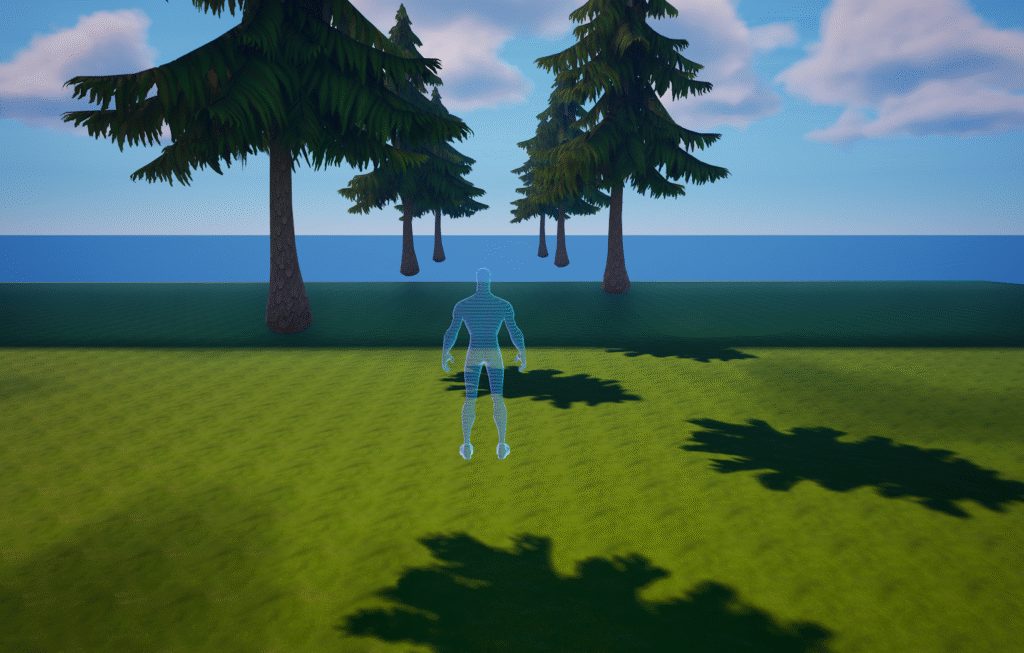
During testing, the ground mesh was unexpectedly sinking. After some debugging, the cause became clear: the mesh only had a single subdivision, leaving the deformation with almost nothing to work with. Increasing it to fifty subdivisions produced the curvature I wanted.
A simple fix, but a good reminder that WPO‑driven deformation is entirely dependent on underlying geometry.
Summary
What I accomplished:
- Established the camera angle and controls for a cozy, readable view.
- Implemented the Curved World material.
- Identified and resolved a mesh deformation issue caused by low subdivision density.
- Evaluated long‑term implications of relying on custom meshes.
What I learned:
- Visual direction decisions often introduce lasting architectural consequences.
- WPO effects require careful mesh preparation to avoid artifacts.
- Early camera work pays off immediately—perspective defines tone before mechanics even exist.