Context
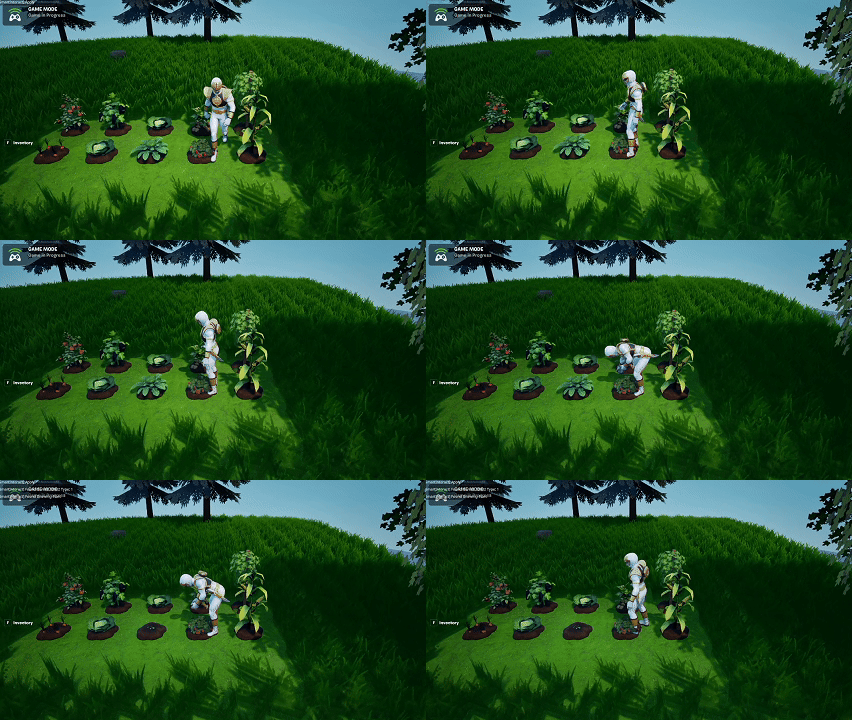
Today was a major milestone for content integration: all remaining crops (ten in total) were imported, set up, and connected to their growth and interaction systems. With this, the core farming catalog is now complete.
Crop Imports & Setup
All remaining crop meshes were:
- Imported into the project
- Set up with their materials
- Configured for the growth‑stage system
- Integrated into planting, watering, and harvesting loops
This completes the foundation for farming variety.
Crafting UI Polish
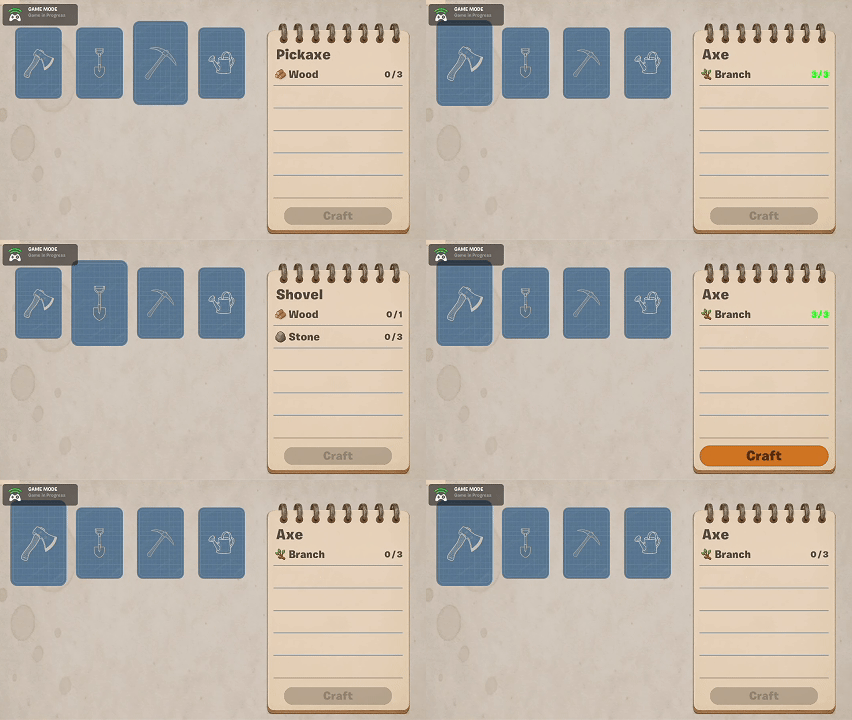
The Crafting UI is now essentially feature‑complete. It reflects the crafting station visually and carries a sense of continuity between the world and the interface.
Inventory UI Direction
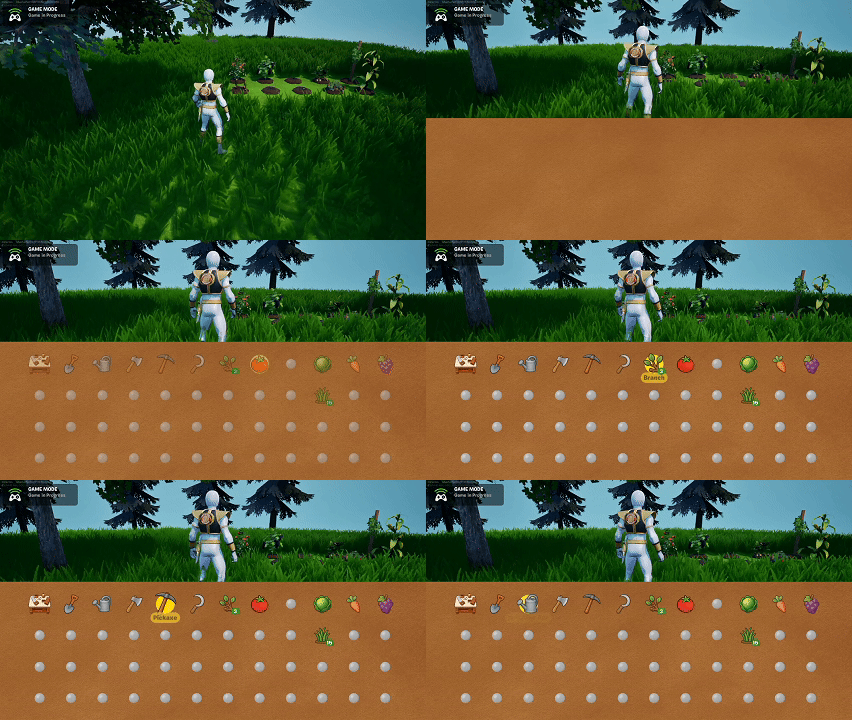
The Inventory UI still needs more work. I’m exploring the idea of giving it a “backpack” motif to match the goal of realism‑through‑continuity.
It’s trickier to execute cleanly because:
- Inventory has more interactive states
- The visual metaphor must remain readable
- Slot highlighting and navigation need to feel natural
But I’m moving in a good direction.
Remaining UI Elements
Two pieces still need attention:
- Interaction Prompt UI redesign
- Toast Notifications polish
I also want more fluid transitions across all UIs once the structure is fully locked in.
Memory Budget Progress
All crop imports and textures put the project at 14% total size, which is exactly where I hoped to land at this stage. Staying under 15% is a huge win, considering how much content has been added.
Summary
What I accomplished:
- Imported and configured the final batch of ten crops.
- Brought the Crafting UI to near‑final form.
- Established a design direction for the Inventory UI.
- Maintained project size under the 15% target.
What I learned:
- UI cohesion matters just as much as functionality.
- Content-heavy updates require strict texture and asset discipline.
- Hitting memory targets early helps prevent stressful late‑stage optimization.