Context
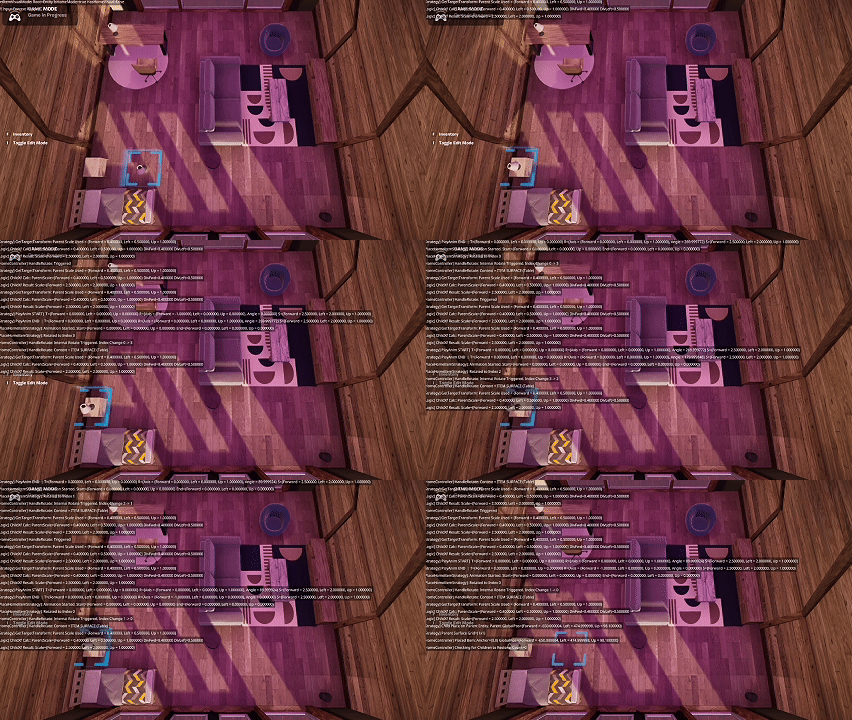
Today I focused on enabling home items to be placed on top of other home items, such as vases on tables. This is a key step toward making interiors feel layered, expressive, and closer to expectations set by cozy life-sim games.
Items on Surfaces (Now Working)
I successfully enabled placement of certain items on other items:
- Decorative items (like vases) can be placed on furniture (like tables)
- Surface-based placement works reliably in normal use
At this point, home items on surfaces are functionally working and usable. There are still a few minor edge cases—such as rugs interacting oddly with ground placement—but overall the feature is in a good state and ready to build on.
The Problem: Moving Parent Items
The main remaining issue appears when interacting with the parent item:
- Selecting and moving the table does not always correctly handle attached child items
- This exposed flaws in how placement and movement were previously implemented
Historically, moving an item worked by:
- Destroying the entity
- Re-adding it while moving
- Destroying it again
- Re-adding it permanently
This approach was sufficient for simple placement but breaks down once items can have children.
Planned Refactor
The path forward is clear: placement and movement need to stop relying on destroying entities.
Instead:
- Items should persist while being repositioned
- Child items should remain attached and move with their parent
This will require a larger refactor, but it’s the correct foundation for layered interiors.
Summary
What I accomplished:
- Enabled home items to be placed on top of other home items.
- Shipped surface placement in a usable state.
- Identified and isolated remaining issues with parent–child movement.
What I learned:
- Layered placement introduces true hierarchy concerns.
- Destroy-and-recreate movement does not scale.
- Minor visual bugs are acceptable once core interaction works.