Context
Today was another UI‑heavy day focused on polish, bug fixing, and experimenting with new visual styles. With most major systems in place, refining the user experience is becoming increasingly important.
Broad UI Polish
I finished applying polish across the remaining UI elements—everything except the loading screen, which will come much later once more of the game’s flow is finalized.
Notable improvements included:
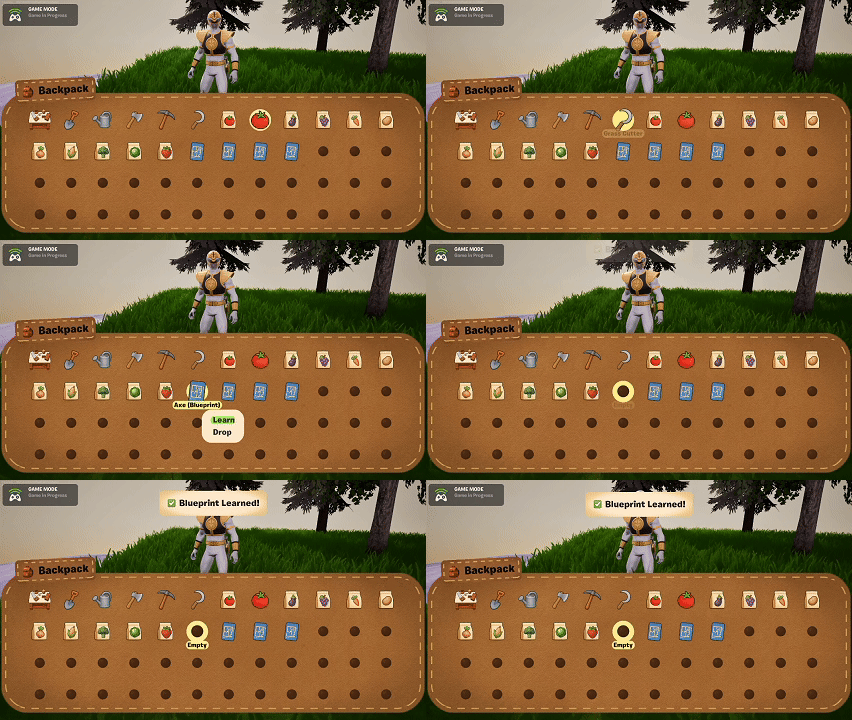
- Updating widget backgrounds to use the new suede‑and‑stitch material
- Refining alignments, spacing, and visual consistency
- Improving responsiveness across multiple UI layers
Inventory UI Bug Fixes
With yesterday’s big visual overhaul complete, I fixed the last lingering bugs:
- Slot selection inconsistencies
- Minor layout clipping issues
- A submenu state bug related to item actions
The Inventory UI is now stable and feels much more cohesive.
Response Submenu Tweaks
I also refined the Response Submenu to make it more intuitive and faster to navigate. This included adjusting highlight timing, spacing, and button feedback.
Attempting an Animated Thought‑Bubble Material
I spent a large portion of the day trying to create a material that resembled an animated thought bubble—the kind of wiggly, dreamy shapes you might see in cozy or cartoon‑style games.
Unfortunately, despite several approaches (UV distortion, panning masks, procedural shapes), I couldn’t get it readable and clean enough for actual in‑game use. After multiple iterations, I decided to pause the idea.
Sometimes letting go of an experiment is progress too.
Summary
What I accomplished:
- Polished nearly all remaining UI (except the loading screen).
- Fixed the remaining Inventory UI bugs.
- Improved the Response Submenu.
- Experimented with an animated thought‑bubble material.
What I learned:
- UI polish compounds quickly—small details make a big difference.
- Some stylistic experiments don’t pan out, and that’s okay.
- The UI foundation is now strong enough to support future features without major rework.